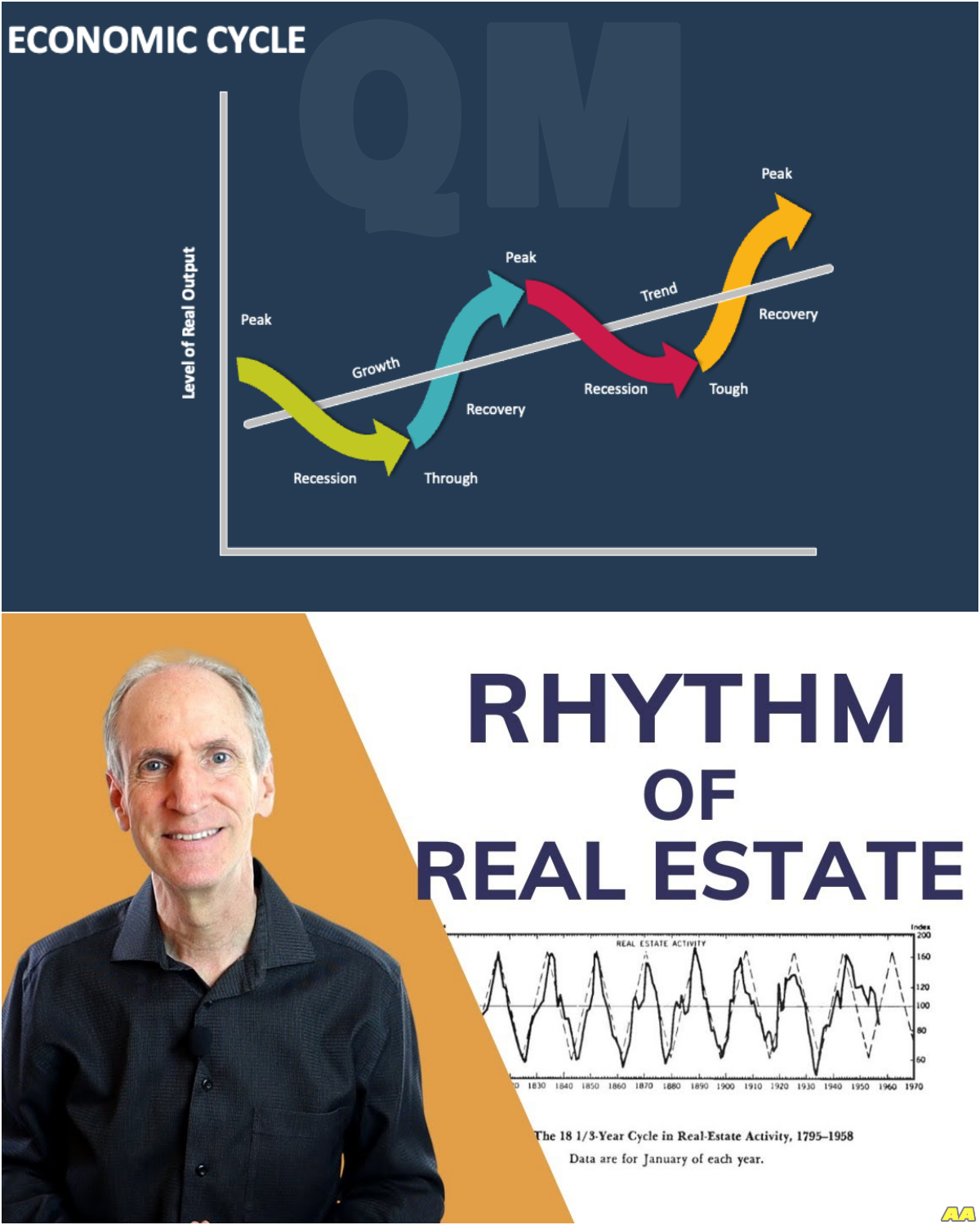
The Mirror in the Market: Mastering the Psychology of Wealth
The Mirror in the Market: Mastering the Psychology of Wealth
Introduction: The Enemy in the Room We spend thousands of hours analyzing price charts, reading annual reports, and comparing insurance premiums.
We hunt for the “perfect” mathematical formula that will guarantee a prosperous future.
But in the quiet hours of a market crash, or the euphoric peaks of a speculative bubble, the most dangerous variable in your financial plan isn’t a high interest rate or a failing corporation.
It is the person staring back at you from the mirror.
Finance is 20% head knowledge and 80% behavior.
You can have a PhD in Economics, but if you cannot control your impulses, you will be outperformed by a disciplined saver with a high school education.
To master your money, you must first master the ancient, emotional hardwiring of the human brain—a brain designed for survival on the savannah, not for trading digital assets in a globalized economy.

The Primitive Brain vs.
The Modern Portfolio Our ancestors survived because they were wired to fear the unknown and run with the herd.
In the wild, if everyone is running in one direction, it’s probably because there’s a predator behind them.
In the stock market, however, if everyone is running in one direction, it usually means the “predator” has already arrived, and the prices are either unsustainably high (euphoria) or devastatingly low (panic).
This is “Herding Behavior.” It is the biological urge to buy when things are expensive because everyone else is happy, and to sell when things are cheap because everyone else is terrified.
To be a successful investor, you must learn to be “counter-cyclical.” You must learn to be, as Warren Buffett famously said, “Fearful when others are greedy, and greedy when others are fearful.” This is easy to say, but physically painful to do.
It requires overriding millions of years of evolutionary instinct.

The Anchoring Effect and Loss Aversion Two psychological “ghosts” haunt every portfolio: Anchoring and Loss Aversion.
Anchoring is the tendency to fixate on a specific number.
If you bought a stock at $100 and it drops to $70, your brain “anchors” to that $100.
You refuse to sell, not because the company is still good, but because you don’t want to “admit” the loss.
You are waiting for it to get back to “even.”
Loss Aversion is even more powerful.
Neurological studies show that the pain of losing $1,000 is twice as intense as the joy of gaining $1,000.
This “negativity bias” causes investors to play it too safe, avoiding the very risks (like equities) that are necessary for long-term growth, or conversely, taking reckless gambles to “win back” what was lost.
Insurance: The Emotional Circuit Breaker This is where the psychological value of insurance shines.
A robust insurance portfolio—life, health, disability—acts as an “emotional circuit breaker.” When you know that your family’s survival is contractually guaranteed regardless of the market, you gain a “psychological superpower.”
You are less likely to panic-sell your retirement accounts during a recession if you have a liquid emergency fund and a rock-solid insurance floor.
Protection isn’t just about the payout; it’s about the “permission to stay calm.” It allows the rational part of your brain (the prefrontal cortex) to remain in charge while the emotional part (the amygdala) is screaming for you to do something—anything—to stop the perceived danger.
The Narrative Fallacy: Stop Looking for Patterns As humans, we are “meaning-making” machines.
we love stories.
We look at a random series of market movements and try to weave a narrative: “The market is doing X because of Y.” This is often a delusion.
The market is a complex, chaotic system that frequently moves for no logical reason at all.
The writerly investor accepts the “noise” of the world.
They don’t try to predict the next chapter; they simply ensure they have enough “capital characters” to survive whatever plot twist the author of history throws at them.
They automate their savings, use “Dollar Cost Averaging,” and ignore the daily financial news, which is designed to trigger your emotions to sell advertising, not to grow your wealth.

Conclusion: The Discipline of the Long View The ultimate “Alpha” (excess return) in finance isn’t found in a secret algorithm; it is found in patience.
In a world of high-frequency trading and 24-hour news cycles, the ability to do nothing is the rarest skill of all.
Your financial plan is a contract between your “Current Self” and your “Future Self.” To keep that contract, you must recognize your biases, hedge your fears with insurance, and treat volatility as the price of admission for long-term prosperity.
Wealth is not a destination you reach by being the smartest person in the room; it is a reward you receive for being the most disciplined.