The Double-Edged Blade: Debt as Financial Leverage
Introduction: The Promethean Fire In the mythology of personal finance, debt is often cast as the villain.
We are told to fear it, to flee from it, and to celebrate the moment we are finally “debt-free” as if we have just escaped a dark dungeon.
But debt, in its purest form, is neither moral nor immoral.
It is a tool—a piece of financial technology.
Like the fire stolen by Prometheus, it can light your home and cook your food, or it can burn your entire village to the ground.
To the sophisticated investor, debt is “leverage.” It is the ability to use a small amount of your own energy to move a very large object.
Understanding the distinction between “destructive debt” and “constructive leverage” is the line that separates the consumer from the capitalist.
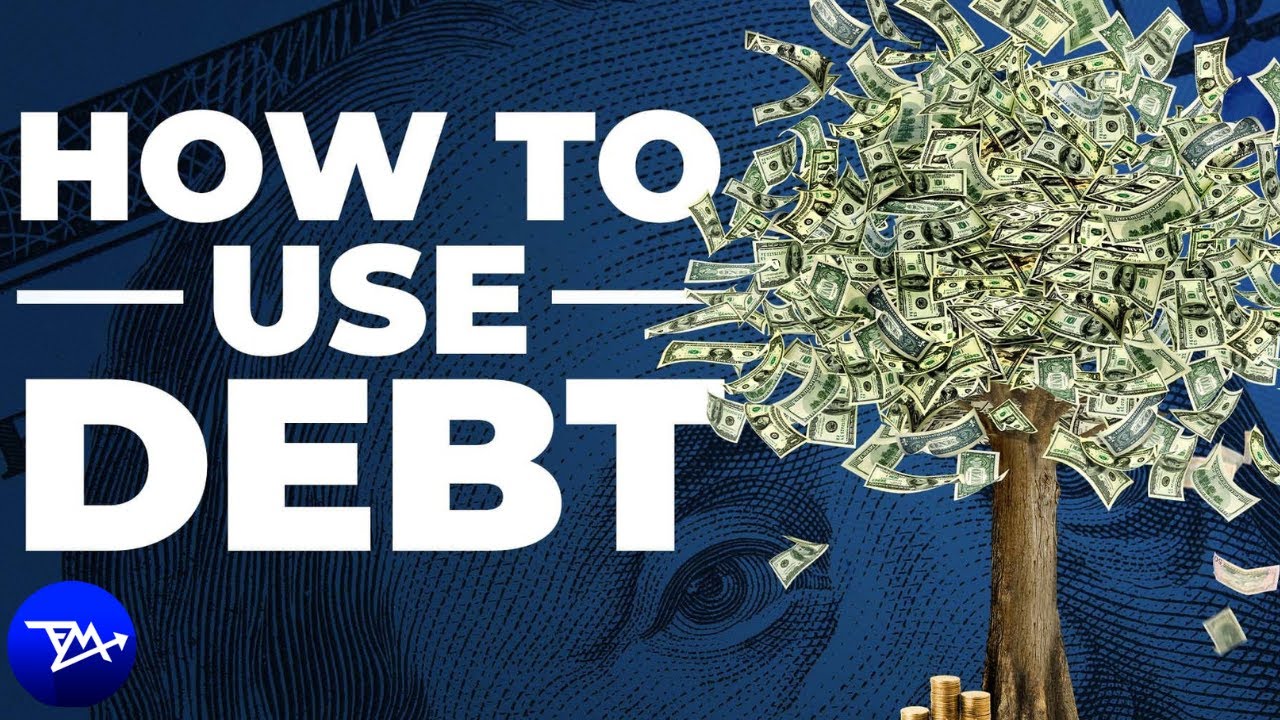
The Weight of Consumption: Bad Debt Destructive debt is the “theft from the future self.” When we use a credit card to buy a luxury vacation or a designer handbag that we cannot afford, we are essentially signing a contract that says: “I will work tomorrow to pay for what I enjoyed today, plus a heavy penalty for my impatience.”
This type of debt has no “utility” other than temporary psychological satisfaction.
It carries high interest rates that act like a “reverse compound interest” engine, silently eroding your net worth while you sleep.
In the narrative of your life, bad debt is a subplot that leads to stagnation.
It is the “friction” that slows down your journey toward independence.
The Power of Magnification: Good Debt On the other side of the blade is “Good Debt”—capital borrowed to acquire an asset that produces more income than the cost of the loan itself.
This is the secret engine of the wealthy.
Consider a mortgage on a rental property.
If you borrow at 4% to own an asset that yields 8%, you are pocketing the “spread.” You are using the bank’s money to build your equity.
In this scenario, debt is not a burden; it is a “multiplier.” It allows you to control a $500,000 asset with only $100,000 of your own capital.
When that asset appreciates, you don’t just gain on your $100,000; you gain on the full $500,000.
This is how small fortunes become legacies.

The Margin of Error: When Leverage Snaps The danger of leverage is that it magnifies everything—including your mistakes.
If you are 5:1 leveraged and your asset drops 20% in value, your entire equity is wiped out.
You are back to zero, or worse, “underwater.”
This is why the “writerly” approach to debt requires a deep understanding of Risk Tolerance.
Leverage is only safe when the underlying asset is stable and the cash flow is predictable.
Borrowing to buy a house is generally considered “safe” because people always need roofs.
Borrowing on “margin” to buy volatile stocks is a high-wire act with no safety net.
The moment the market wobbles, the lender calls in the debt (a “Margin Call”), and the investor is forced to sell at the bottom.
The Insurance Connection: Protecting the Leverage Whenever you use debt, you create a liability that must be serviced regardless of your circumstances.
This is where insurance becomes the “structural integrity” of your leverage.
If you have a $1 million mortgage, you have $1 million of “leveraged wealth.” But you also have a $1 million “ticking clock.” Life and disability insurance are the only tools that can instantly “retire” that debt if the borrower’s income stream is cut short.
A well-placed policy ensures that your “good debt” doesn’t turn into a “bad inheritance” for your family.
It secures the leverage so that the dream of the asset survives the reality of the tragedy.

The Psychological Freedom of the “Lien-Free” Life Despite the mathematical advantages of “Good Debt,” there is an undeniable psychological weight to owing money.
For many, the “peace of mind” of a paid-off home is worth more than the 2% spread they might make by investing that cash in the market.
This is the “Human Element” of finance.
A spreadsheet will tell you to keep the low-interest mortgage and invest the difference.
But if the debt keeps you awake at night, it is “expensive” regardless of the interest rate.
True wealth is the ability to sleep well.
Your debt strategy must align with your temperament, not just your calculator.

Conclusion: Mastering the Blade Debt is a powerful servant but a terrible master.
To build a 30-year financial masterpiece, you must learn to handle leverage with the precision of a surgeon.
Use it to acquire productive assets, protect it with robust insurance, and never—under any circumstances—let it be used to fund a lifestyle your current income cannot support.
When you control your debt, you control your destiny.
When debt controls you, you are merely an employee of your own past mistakes.
News
The Final Summit: The Integration of Wealth, Wisdom, and Worth
The Final Summit: The Integration of Wealth, Wisdom, and Worth Introduction: The View from the Peak Every great story has…

The Zen of Finance: Finding Clarity in a World of Noise
The Zen of Finance: Finding Clarity in a World of Noise Introduction: The Fog of Abundance We live in an…
The Sovereign Self: The Strategic Path to Financial Independence
The Sovereign Self: The Strategic Path to Financial Independence Introduction: Redefining the Finish Line For generations, the “Standard Narrative” of…
The River of Revenue: Mastering the Flow of Passive Income
The River of Revenue: Mastering the Flow of Passive Income Introduction: The Mirage of “Doing Nothing” In the popular mythology…
The Owner’s Advantage: Equity, Enterprise, and the Engine of Scale
The Owner’s Advantage: Equity, Enterprise, and the Engine of Scale Introduction: Beyond the Hourly Rate In the early chapters of…
The Currency of Impact: The Strategic Art of Giving Back
The Currency of Impact: The Strategic Art of Giving Back Introduction: The Final Stage of Wealth In the natural progression…
End of content
No more pages to load