The Silent Erosion: Navigating the Invisible Tide of Inflation
Introduction: The Ghost in Your Wallet
If money is the language of value, then inflation is the slow, persistent fading of the ink.
We often check our bank balances and feel a sense of static security; the numbers remain the same, carved into the digital ledger like stone.
But money is not a static object; it is a vessel for purchasing power.
And in the world of macroeconomics, that vessel has a leak.
Inflation is often described as “too much money chasing too few goods,” but for the individual investor, it is better understood as a “temporal tax.” It is the process by which the future is slowly stolen from the present.
To ignore inflation is to build a house on a beach while ignoring the rising tide.
You may not feel the water moving today, but eventually, the foundation will be underwater.

The Illusion of Nominal Safety
The human brain is wired for “nominal” thinking.
If we have $100,000 today and we have $100,000 in ten years, we feel as though we have preserved our wealth.
This is the great deception of the “Mattress Strategy.” In reality, at a modest inflation rate of 3%, that $100,000 will only buy about $74,000 worth of today’s goods a decade from now.
In the narrative of finance, “cash” is often portrayed as the ultimate safety net.
But in an inflationary environment, cash is a melting ice cube.
It is the only asset guaranteed to lose value over time.
To be a truly successful steward of wealth, one must transition from being a “saver” to being an “investor.” Saving is about quantity; investing is about quality—the quality of your future purchasing power.
The Great Hedge: Assets That Breathe
How do we fight an invisible enemy? We invest in “breathing assets.” These are investments that have the inherent ability to adjust their value as the cost of living rises.
Equities (Stocks): A company is a living organism.
When the cost of raw materials rises, the company raises its prices.
Therefore, earnings—and eventually stock prices—tend to track with inflation over long horizons.
Real Estate: Perhaps the most classic inflation hedge.
As the price of milk and bread goes up, so does the cost of lumber and labor, making existing buildings more valuable.
Furthermore, landlords can raise rents, ensuring the income stream keeps pace with the devaluing currency.
Commodities: Gold, oil, and agricultural products are the “raw materials of existence.” When the currency weakens, the “stuff” the world is made of becomes more expensive in dollar terms.
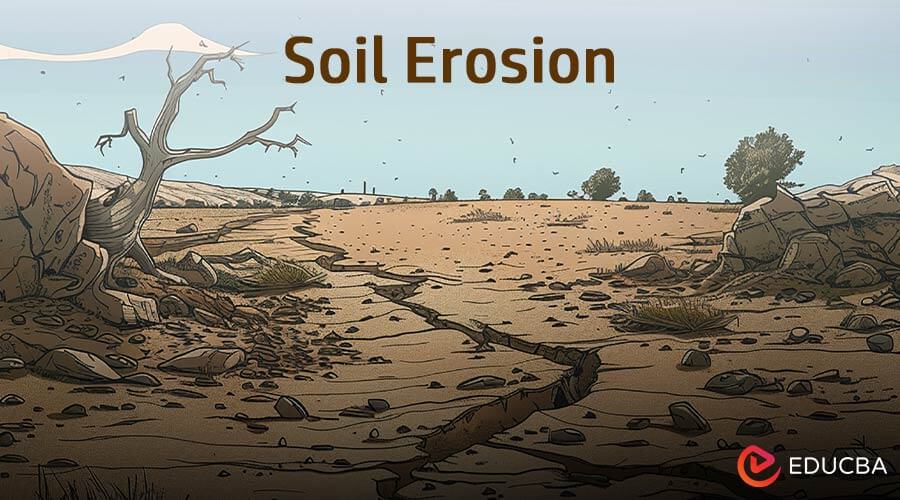
Insurance as an Inflationary Shield
The relationship between insurance and inflation is complex and requires a “writerly” eye for detail.
On one hand, a fixed death benefit can lose its “punch” over thirty years.
This is why sophisticated financial planning often utilizes Variable or Indexed Universal Life policies, or policies with “Cost of Living Adjustments” (COLA).
Moreover, the “cash value” within certain whole life policies can act as a stabilizing force.
When interest rates rise—often a byproduct of inflation—the dividends and interest credited to these policies can increase.
Insurance isn’t just a static contract; in its most advanced forms, it is a dynamic instrument designed to evolve alongside the economy.
It ensures that the “safety net” you buy today isn’t just a handful of threads by the time your family needs it.

The Psychology of the “Sticky” Price
We feel inflation most acutely at the gas pump or the grocery store.
These “micro-traumas” often lead to emotional investment decisions—panic-buying gold or selling off bonds in a frenzy.
But the wise investor looks at the “Real Rate of Return.”
$$Real\ Return = Nominal\ Return – Inflation$$
If your savings account pays 5% but inflation is 6%, you are getting poorer, despite the growing numbers.
Conversely, if your portfolio is “only” up 4% during a year of 1% inflation, you are winning.
Mastering finance requires stripping away the vanity of the nominal number and looking at the raw utility of the wealth.

Conclusion: Winning the War of Attrition
Inflation is not a crisis to be solved; it is a condition to be managed.
It is the “friction” of the economic engine.
You cannot stop it, but you can choose to own the assets that benefit from it rather than the currency that is consumed by it.
By shifting your perspective from “holding money” to “owning productive capacity,” you turn the silent erosion of inflation into the wind at your back.
Wealth is not about how many bills you have in your hand, but how many futures those bills can still unlock.
News
The Final Summit: The Integration of Wealth, Wisdom, and Worth
The Final Summit: The Integration of Wealth, Wisdom, and Worth Introduction: The View from the Peak Every great story has…
The Zen of Finance: Finding Clarity in a World of Noise
The Zen of Finance: Finding Clarity in a World of Noise Introduction: The Fog of Abundance We live in an…
The Sovereign Self: The Strategic Path to Financial Independence
The Sovereign Self: The Strategic Path to Financial Independence Introduction: Redefining the Finish Line For generations, the “Standard Narrative” of…
The River of Revenue: Mastering the Flow of Passive Income
The River of Revenue: Mastering the Flow of Passive Income Introduction: The Mirage of “Doing Nothing” In the popular mythology…
The Owner’s Advantage: Equity, Enterprise, and the Engine of Scale
The Owner’s Advantage: Equity, Enterprise, and the Engine of Scale Introduction: Beyond the Hourly Rate In the early chapters of…
The Currency of Impact: The Strategic Art of Giving Back
The Currency of Impact: The Strategic Art of Giving Back Introduction: The Final Stage of Wealth In the natural progression…
End of content
No more pages to load